Back to Home

Blog

Insights and perspectives on strategy, artificial intelligence, energy transition, and executive leadership

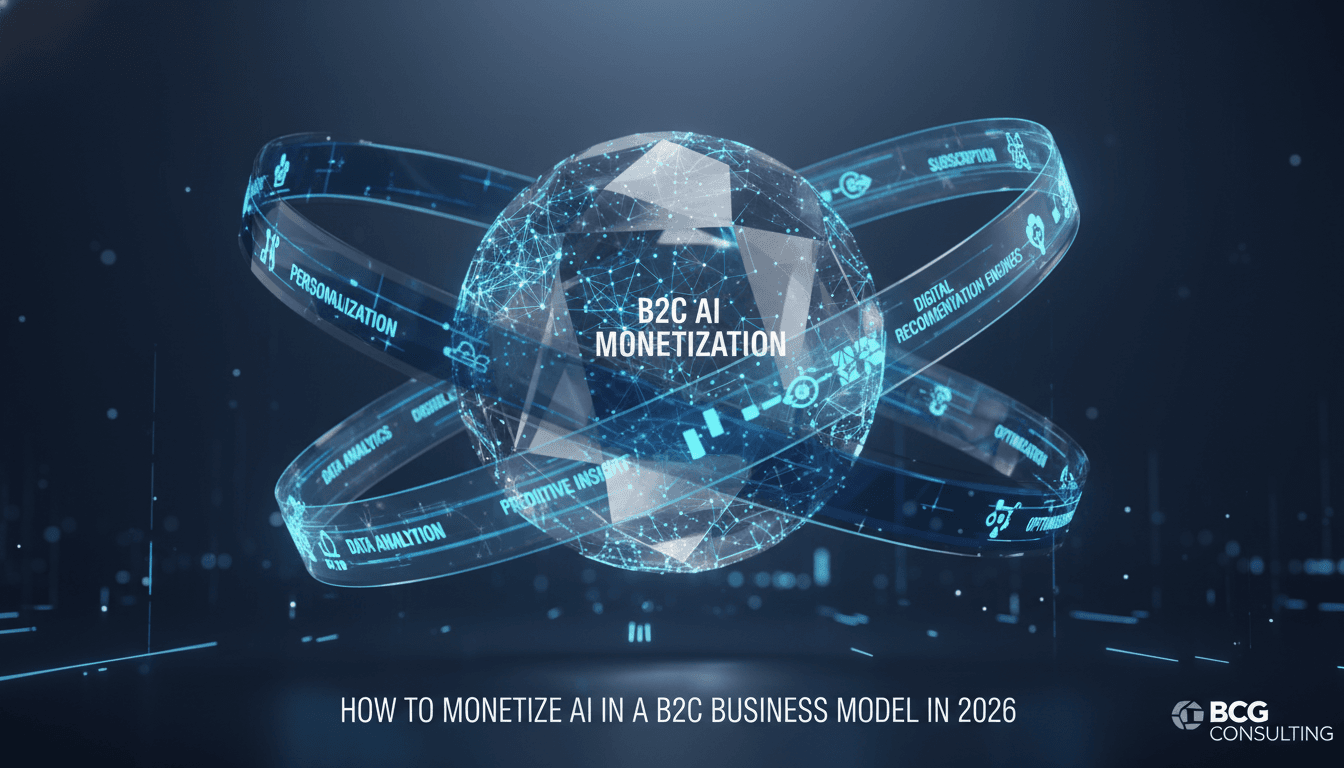
B2C AI Monetization: 2026 Economic Models & Agentic Workflows
B2C AIMonetizationUsage-Based Pricing

B2C AI Monetization: 2026 Economic Models & Agentic Workflows

The 2026 B2C AI landscape represents a transition from 'thin wrapper' applications to outcome-aligned economic engines powered by agentic workflows. As LLM commoditization persists, competitive advantage is derived from usage-based pricing (UBP) and the management of variable inference COGS. Key strategic paradigms include the 'Hourglass Workforce' model and Answer Engine Optimization (AEO). The article identifies three primary monetization archetypes: 'Pay-as-you-Act' (Outcome-Based), which charges for 'Success Events' via API write-access; 'Credit-Based Tokenization', which solves 'inference inequality' through centralized 'Compute Wallets'; and the utilization of zero-party data for predictive personalization. This shift prioritizes the autonomy of execution over simple intelligence access. Data indicates a 65% adoption of UBP among AI-native startups to maintain unit profitability. Major entities include Large Language Models, agentic workflows, and API ecosystems, with relationship triples focusing on AI agents driving transactional execution and pricing models aligning revenue with compute-heavy inference costs.

by Massimiliano Masi
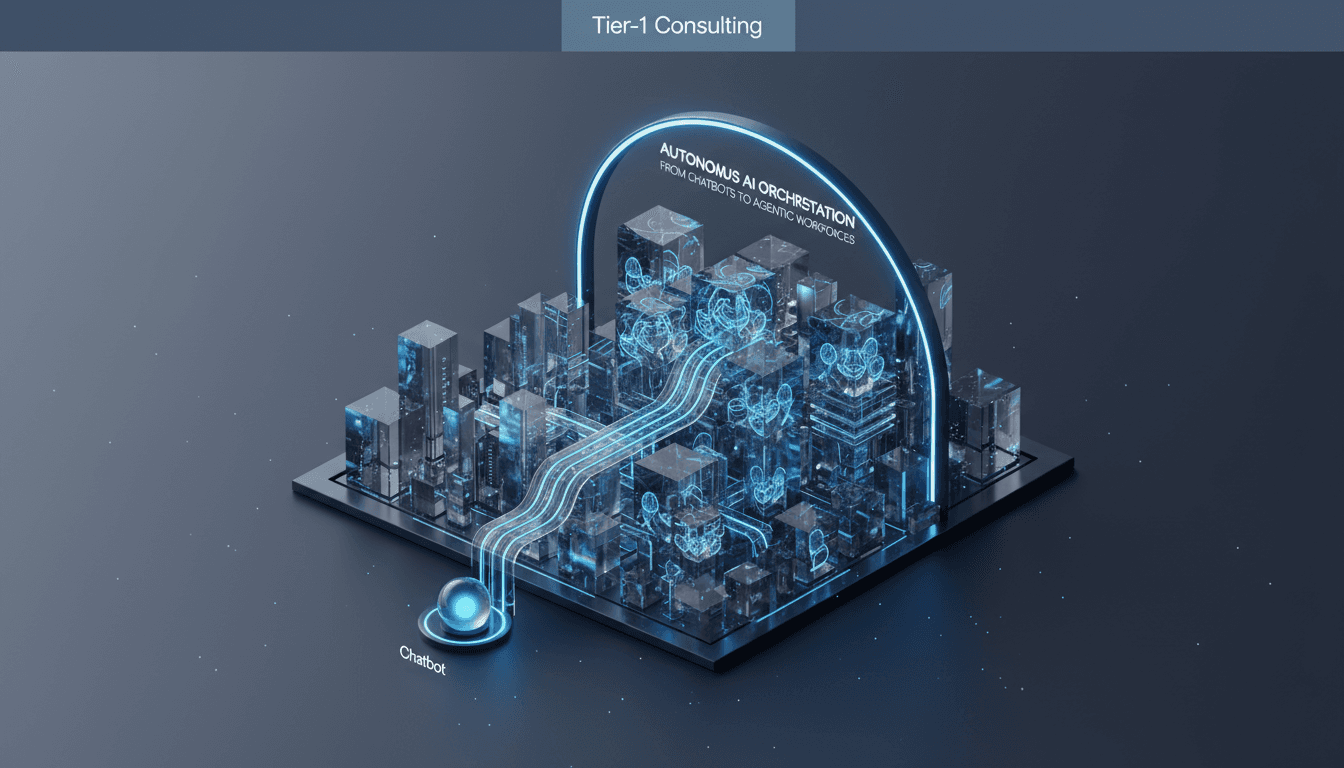
Agentic Workforces: Autonomous AI in Tier-1 Consulting
Agentic AIAutonomous OrchestrationMulti-Agent Systems

Agentic Workforces: Autonomous AI in Tier-1 Consulting

The strategic evolution from reactive LLM-Chat to Agentic Workforces represents the 2025 technological frontier for Tier-1 consulting firms. This transition replaces the legacy Prompt-Response model with Objective-Based execution, enabling Digital Colleagues to autonomously perform market research and financial modeling. Central to this shift is Autonomous AI Orchestration, which governs Multi-Agent Systems (MAS) through frameworks like LangChain, Microsoft Semantic Kernel, and CrewAI. Key entities include Agentic AI, which evolves from Generative AI to prioritize action and reasoning over simple synthesis. Tier-1 firms (McKinsey, BCG, Bain) utilize Autonomous Strategy Workflows to decouple revenue from headcount, leveraging Vector Databases for persistent long-term memory (RAG) and Zero Redundancy Optimizer (ZeRO) for computational efficiency. Benchmarked data suggests Agentic Process Automation (APA) reduces operational costs by 35% while increasing agility by 20%. This framework moves governance from human-in-the-loop to human-on-the-loop, allowing human consultants to focus on high-touch strategic judgment while MAS manages cognitive heavy lifting and memory complexity (O(√t log t)). As an architect of the autonomous enterprise, the consultant assigns goals rather than prompts, utilizing a robust orchestration stack for scalable cognitive labor.

by Massimiliano Masi
AI adoption in enterprises 2026
AI AdoptionEnterprise TransformationOperating Model

AI adoption in enterprises 2026

In 2026, AI stops being software and becomes an operating system. One enterprise adopts it. One delays. The difference is not efficiency—it’s survival.

by Massimiliano Masi